What is poetry?
There is not a right or wrong answer on what poetry can be. If we look at the history by pinpointing the earliest works of poetry, we can see poetry has been around for thousands of years. We could consider ‘The Epic of Gilgamesh,’ as the first example of poetry, emerging as early as the 20th century B.C. Leaping hundreds of years forward; we could turn to the sonnet form and it’s early arrival in the 13th century.
When most of us think about poetry, we immediately think of something romantic. I asked my friends and family, the question, ‘‘when I mention the word poetry, what is the first thought that comes to your head.’’ The majority of them gave answers associated with romance, and a few mentioned the works of Shakespeare. I found this very fascinating as I realised as children when poetry was practiced in classrooms or at home, it had always been linked to romance, which is why those who were taught poetry in secondary school never had the opportunity to see how broad poetry really is. In 20th and 21st centuries, modernism and the influences of change brought about by world war also influenced poetry, resulting in works that could be considered as darker than the romantic era. Now we are living in a period where we could write a romantic poem, an emotional poem or gothic poem and they all would be considered as a beautiful words as the world now dwells with a variety of poets with distinct voices.
At my university, I joined an Edlab project that involves writing and exploring poetry written by children in Manchester, this builds on the status of Manchester as a UNESCO City of Literature. Our aim is to design work with the young people around the writing, performance and display of poetry. My group were assigned to hold a poetry workshop at Stanley Grove Primary School for year 5 children but before we conducted this task we had a few sessions with class peers and discussed topics regarding poetry and worked on a few questions.
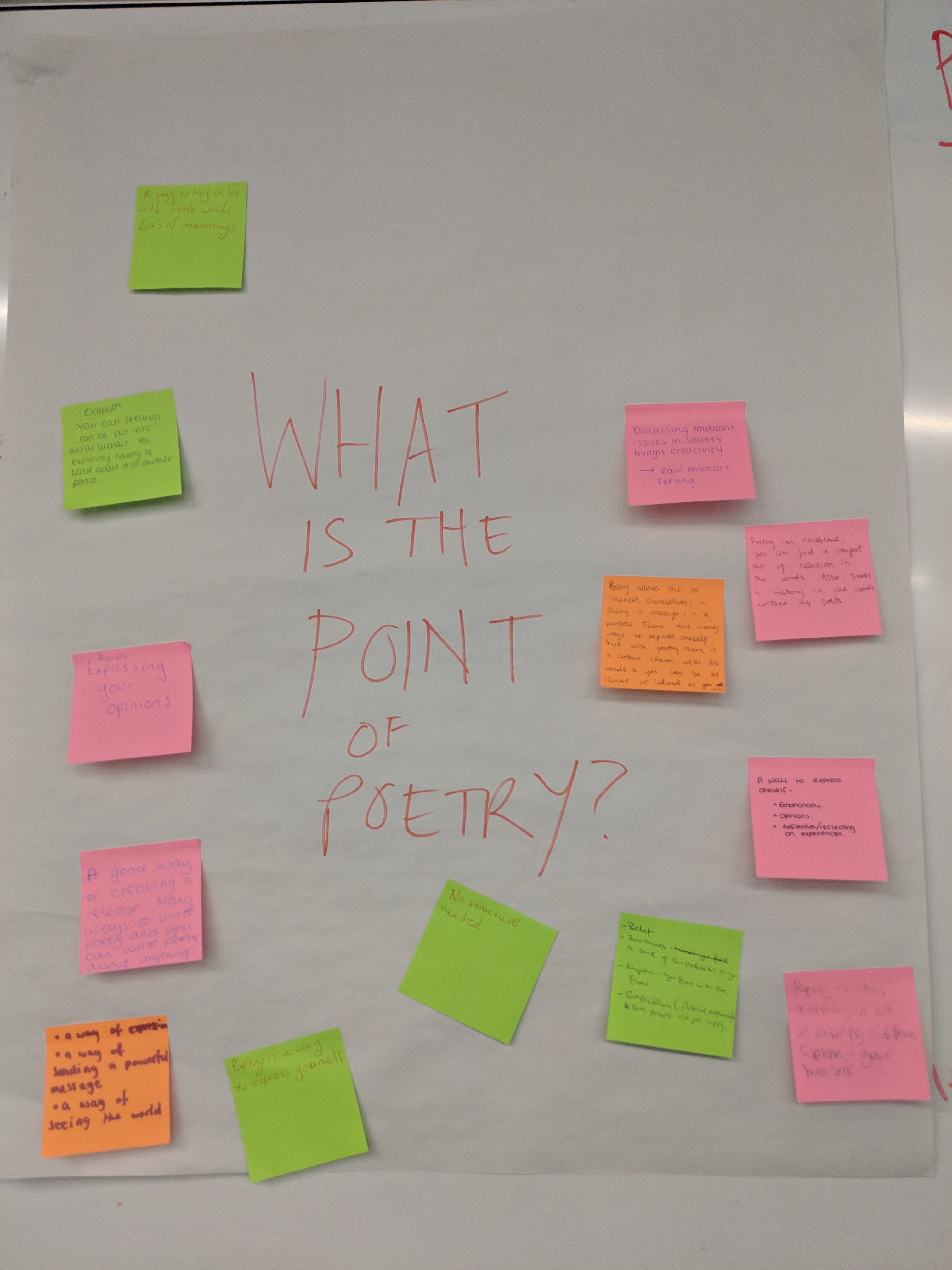
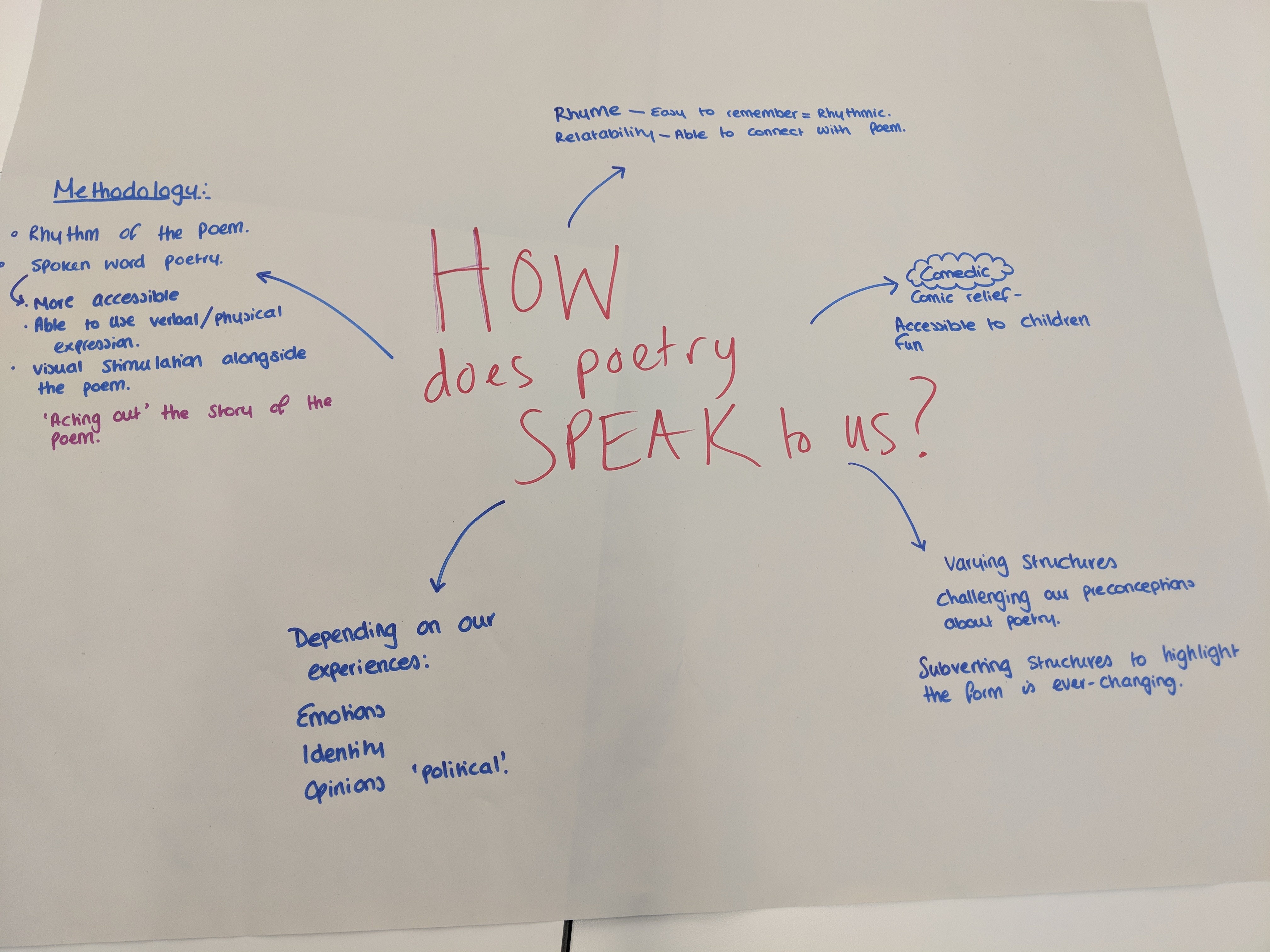
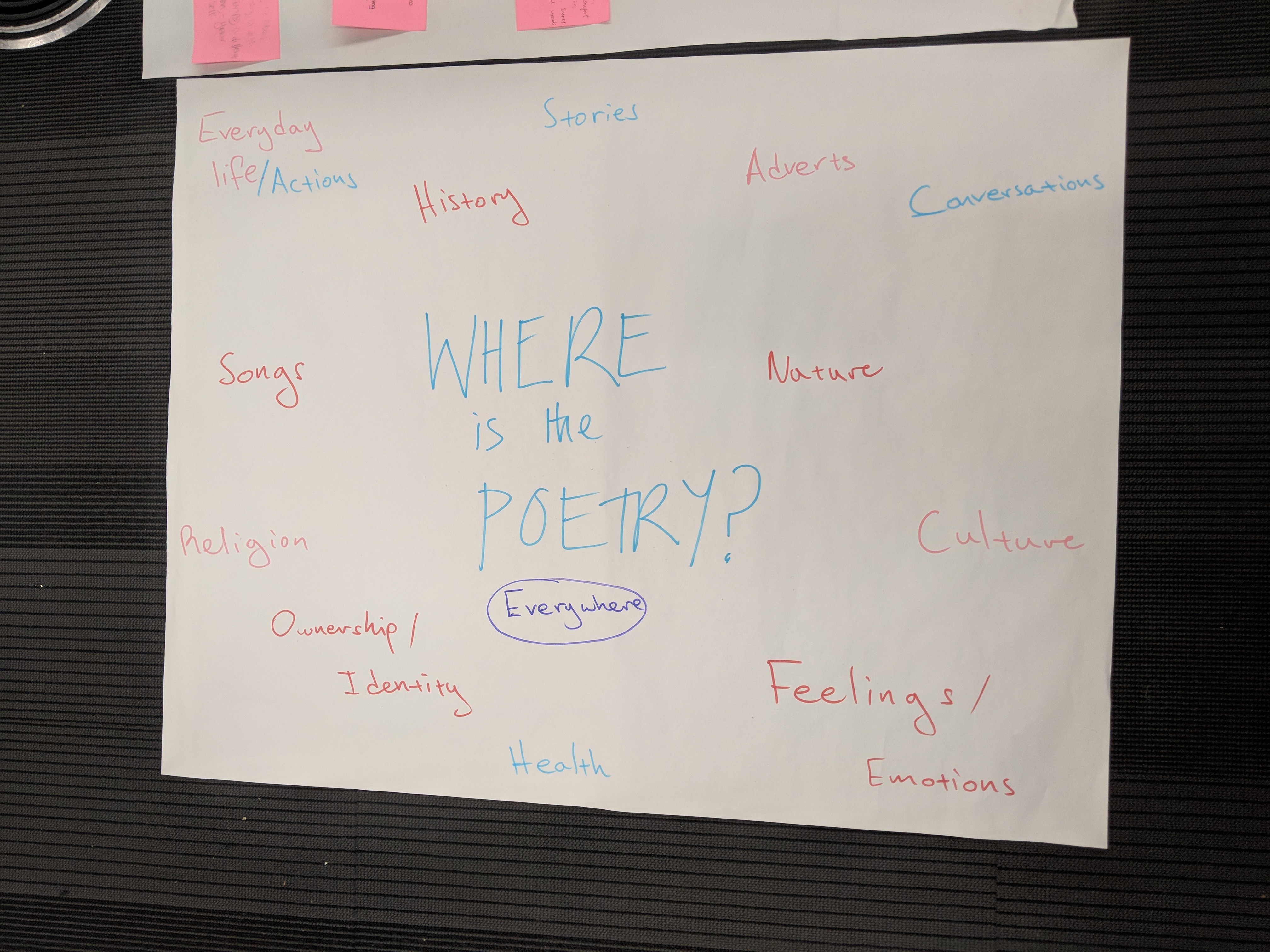
What is the point of poetry?
This was my favourite question that we discussed in the Edlab session because if I had a penny for every time, someone has told me they do not like poetry, ‘its boring or pointless’, I would be a millionaire. Still, it is understandable that some just do not like poetry as everyone has different interests. Even though I have loved poetry from a younger age, it still fascinates me how there is an importance and beauty within poems. Most of the answers to the question above were mainly focused on how poetry is gateway, a sanctuary for some. It is an expression of feelings that you might not be able to discuss through discourse, yet you are able to discuss it through the poem you write. This is the main reason why I love poetry, I believe it helps people and unfortunately not many people are aware of this. Students that are new to poetry generally respond to it by expressing confusion or dismissing it as some poems are quite complex. This is the downfall of how poetry has been taught in the past, in primary, secondary and college poetry had always been introduced in its poetic form and complex words. From a younger age, poetry should also focus on the raw expression and emotion which poems include as many people think that poetry has to rhyme and have complex words due to the poems that are used in English lessons. I am not saying never o use Shakespeare again as he is the ultimate legend of English language! Though, introducing poems that are not poetic, infamous or ones you can find on the poetry archive website would give students more knowledge on what poetry really is and that the rhyming does not matter! In addition, if poetry was used more in primary school it could be a technique for safe guarding as writing poems can also reveal real emotions that one goes through, I believe this would be an idea for an effective change in practising poetry in a classroom.
Trip to Stanley Grove Primary School
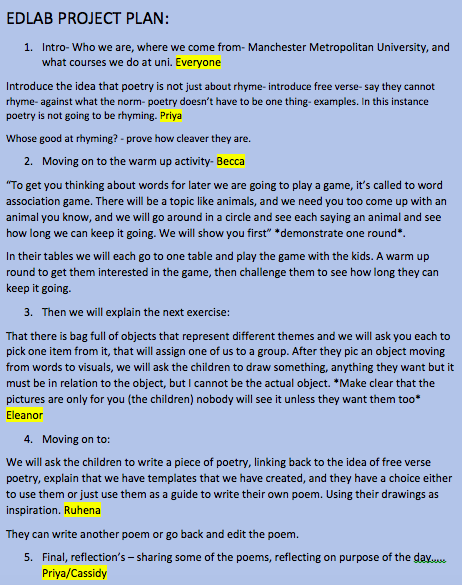
Planning the poetry workshop for the year 5 class was interesting, yet tricky as we did not know what to expect from the children, we had to take inconsideration that they were from a multilingual background therefore the ideas that our group thought of had to work well with all of the socio economic groups.
Before I had the first meeting with my group I began to research education studies on children poetry, I found a book called, ‘Creative Ways to Teach Literacy: Ideas for Children aged 3 to 11’, written by Virginia Bower, it was very helpful as it gave me an insight of how to make literacy teaching engaging for children as they get the most out of their learning when it is exciting. Each chapter has advice on teaching poetry, it also contains case studies that links to research and ideas to carry out. The book covers a range of topics including, : – writing from experience, exploring traditional tales, using playground games as a foundation for literacy and performing poetry. The book enabled me to develop ideas that I could discus in with my peers and together we could think of exciting ideas for the children. We met a few times in the library and together we thought of a plan and structured out the workshop we were going to hold with the children.
The day finally came, at first I was quite nervous because I had never taught children before, however the fact that I get along with children very well began to gave me confidence that I will work well with the children. When we arrived in the classroom we all introduced ourselves to the children we adapted very well to the classroom environment.
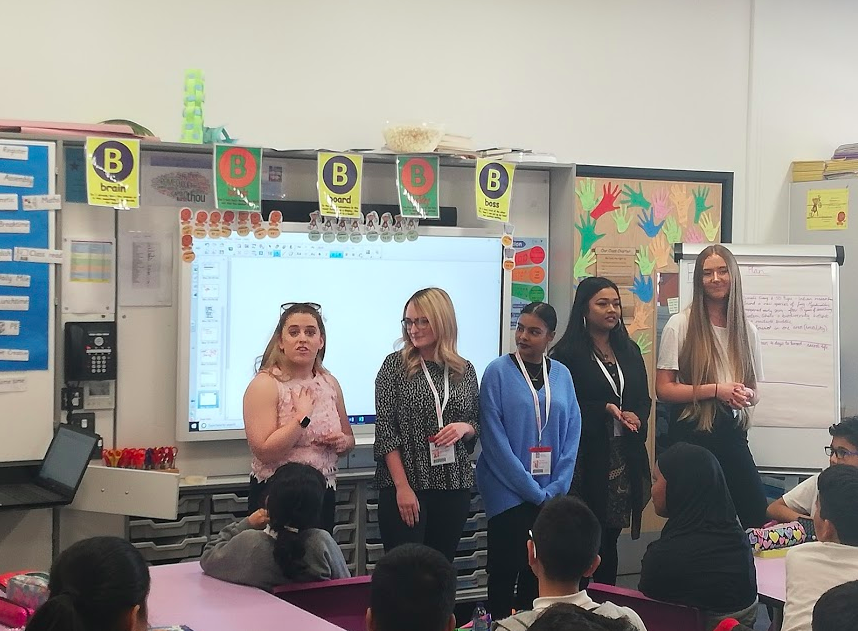
We we first lead a warm up activity as it sets a friendly environment and it can motivate the children to participate in the workshop. We wanted to link the warm up activity with the poetry therefore we played a word association game with the children as its purpose was to get them thinking about words for the second half of the workshop. The idea of using a game links to the book I mentioned earlier, as there is a chapter in it called ‘Playground Games as a Foundation for Literacy Lessons,’ using games in a classroom provides an opportunity for children to engage with language without robbing them of their enjoyment.
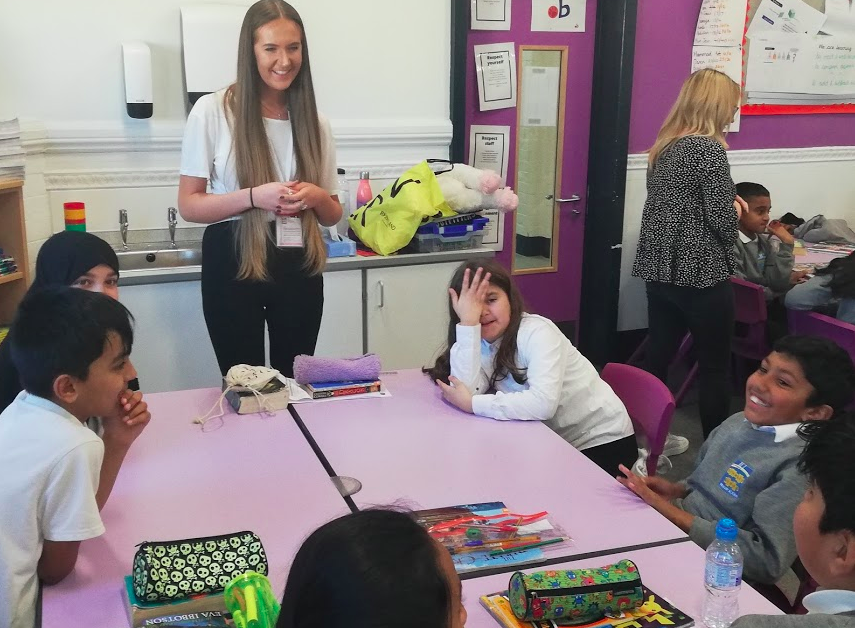
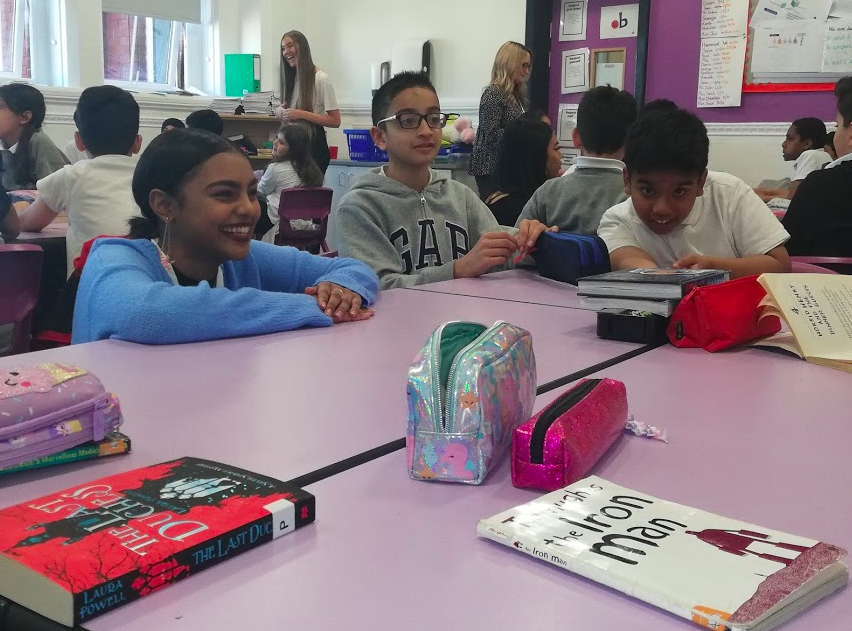
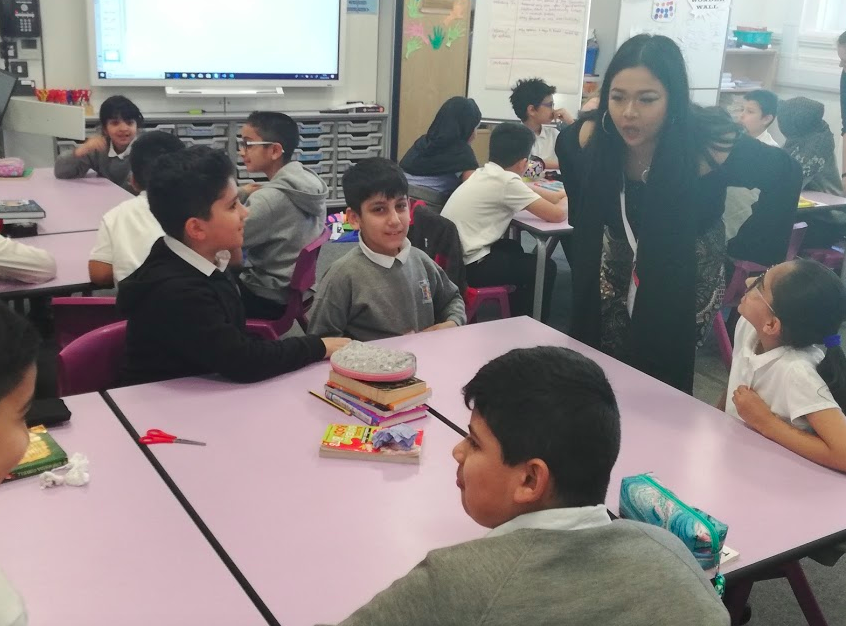
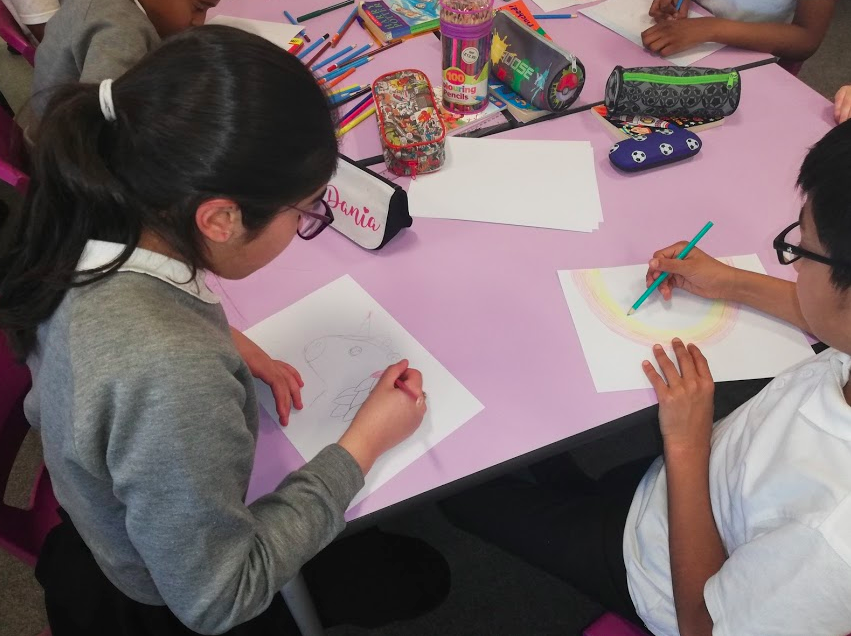
From words to visuals, the second activity was to choose an object and then draw something but it had to relate to the object. I thought about the drawing idea after I read an online journal called, ‘Poetic Language, Interdiscursivity and Intertextuality in Fifth Graders’ Poetry: An Interpretive Study,’ written by Janine Certo. It is about identifying drawings with written words like poetry and how it influences children’s writing and literacy learning. Therefore, I thought of the idea of using a visual activity as not only is it engaging, it enables the children to become visually creative which they later can project it into their poetry.
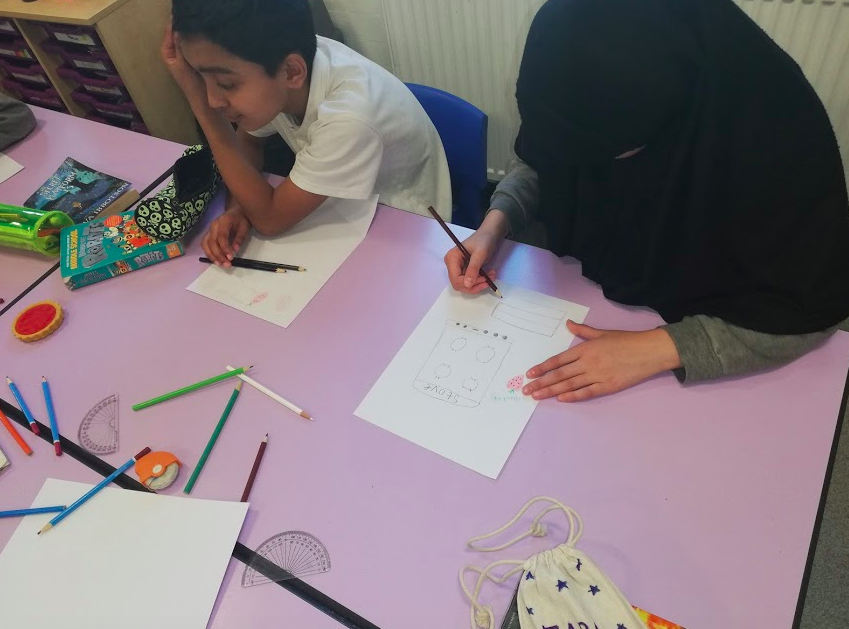
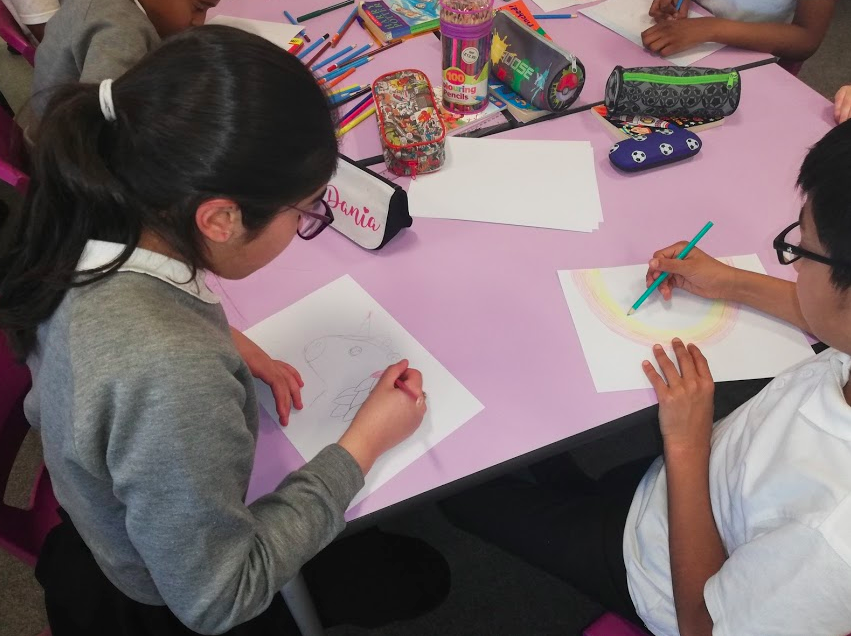
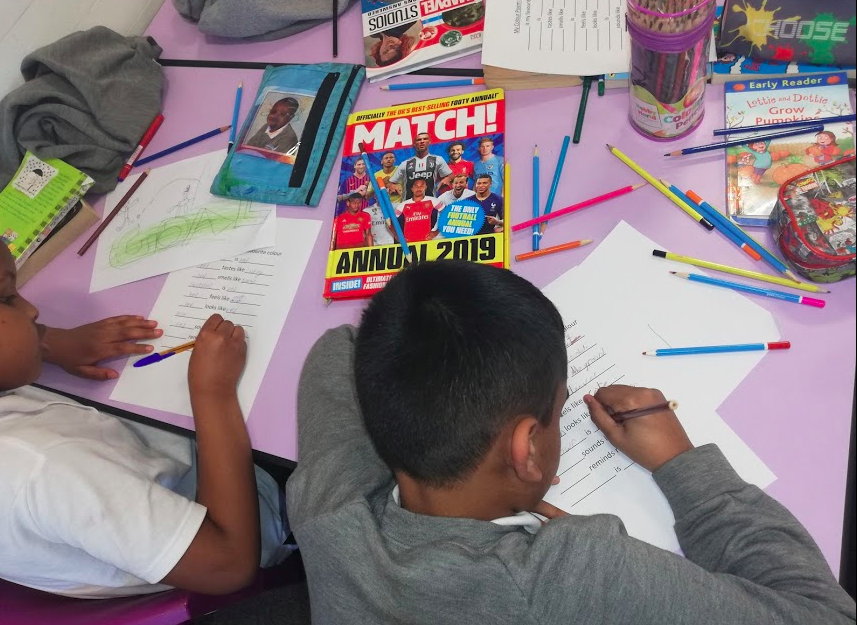
The children worked very well on the drawings, they looked at the objects we brought in and became inspired immediately. 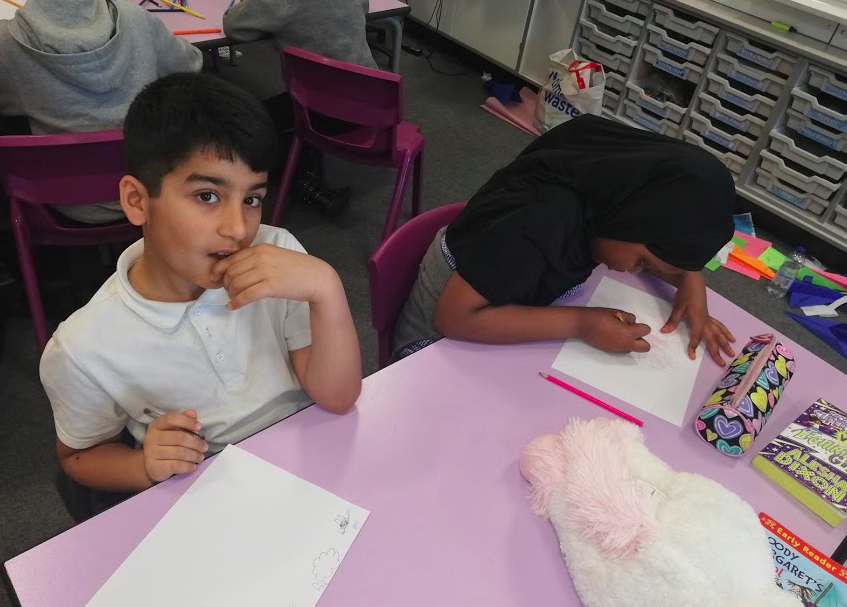
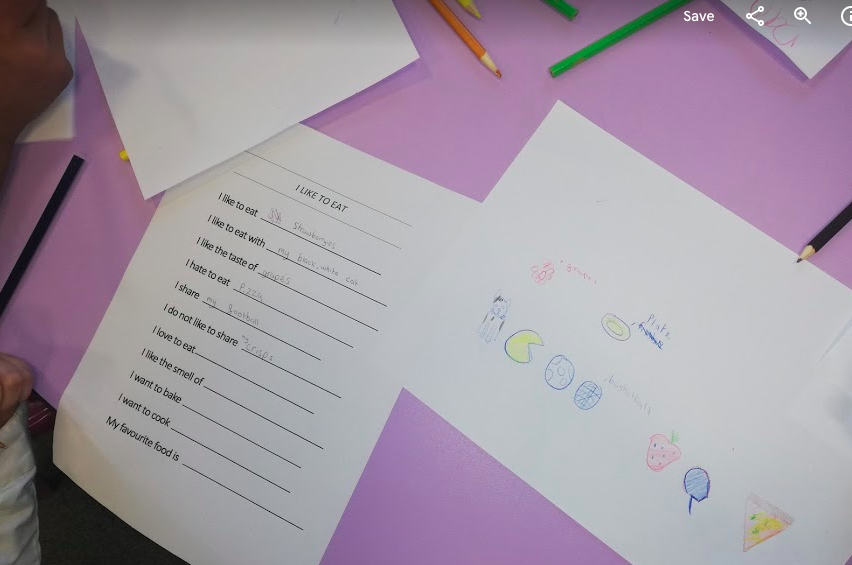
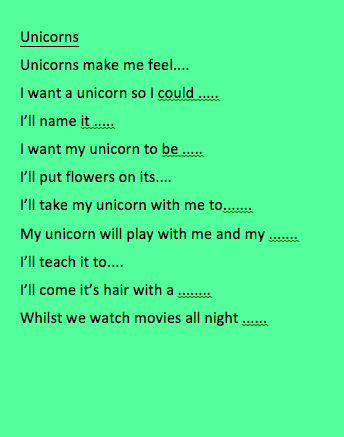
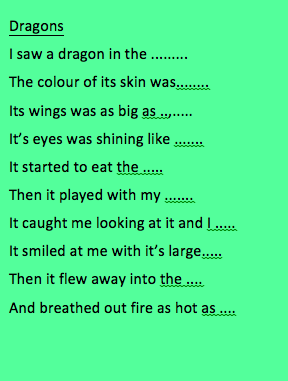
Lastly we asked the children to write a poem linking back to the idea of poetry does not need to rhyme, it can be anything! We all created template poems for the children and ensured the templates were suited for both genders. However, we gave them the choice to use them as a guide to write their own poems or use their drawings as inspiration.
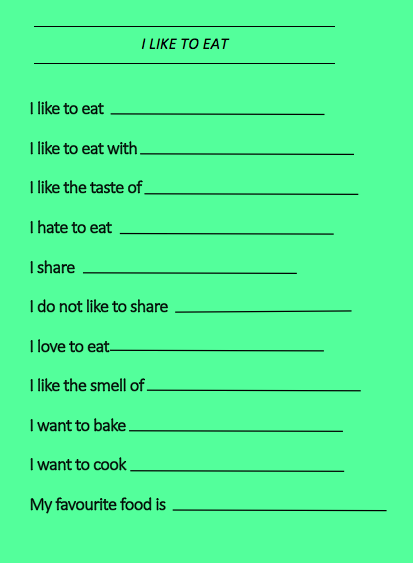
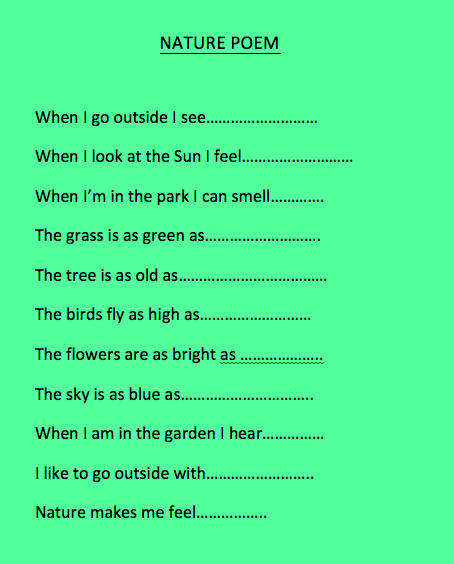
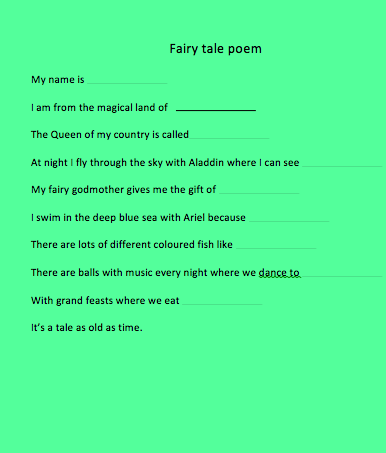
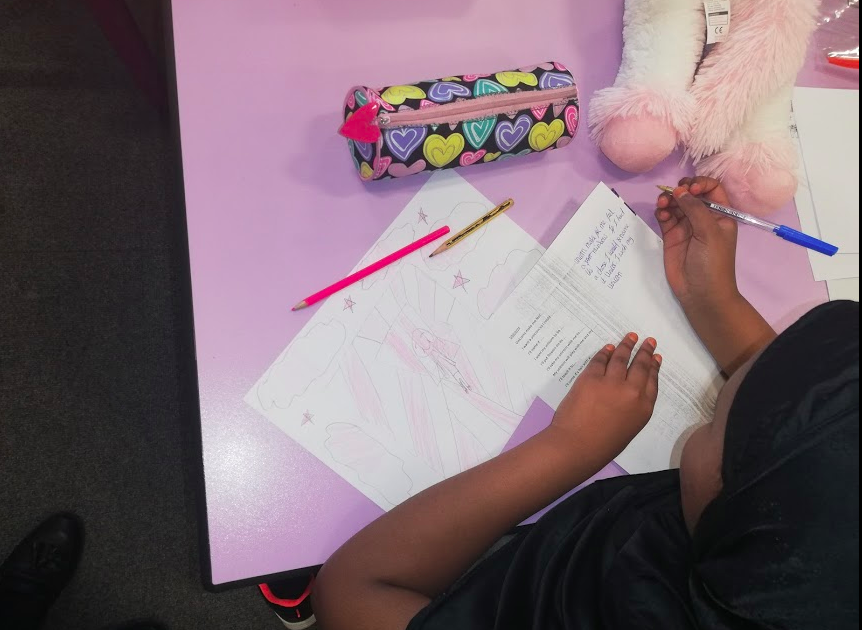
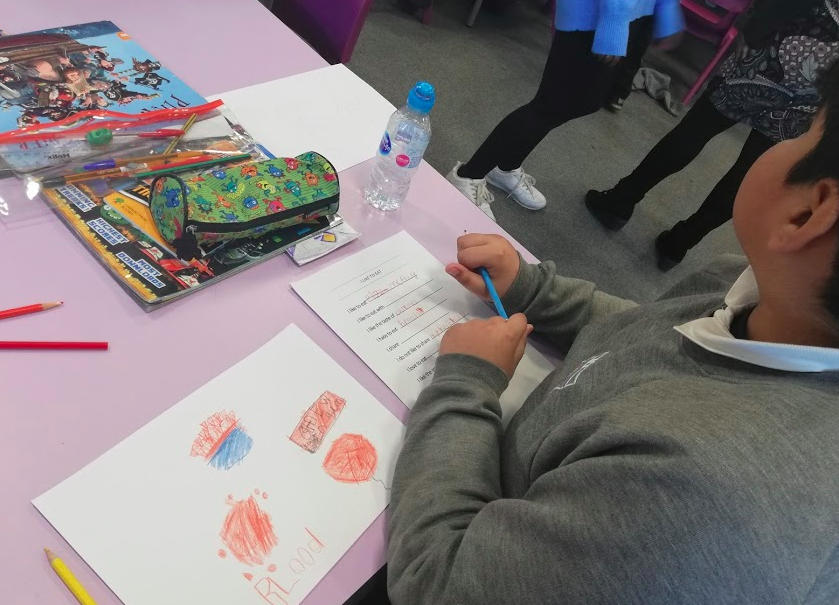
All the poems are very different from one another, we wanted to create a variety of templates so they can interest all of the children. The two poems below I created, I decided to make two poems, I had the theme mythical creatures so I chose a unicorn and a dragon as they are fascinating creatures and who does not love unicorn and dragons! Therefore the children would be fine connecting with the similes and metaphors I used in the poems as I wanted to make it catchy.
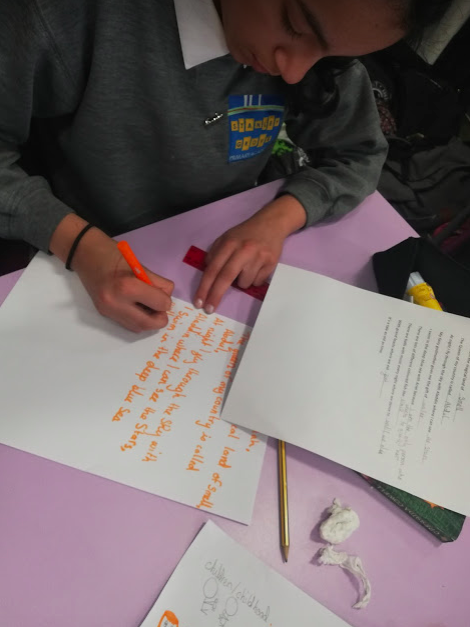
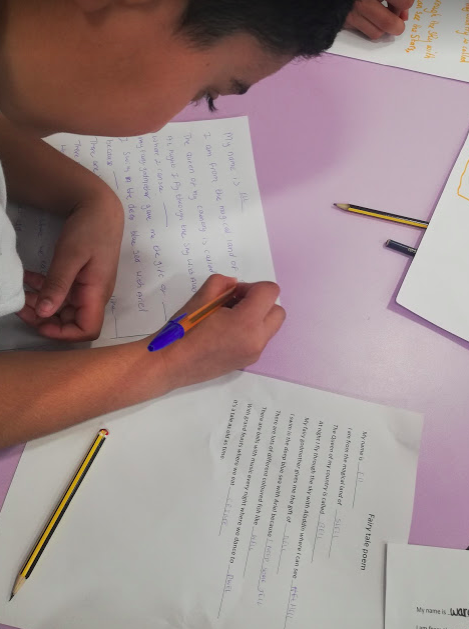
Quite a few of the children wanted to write their own poem after trying out the template which was fantastic! 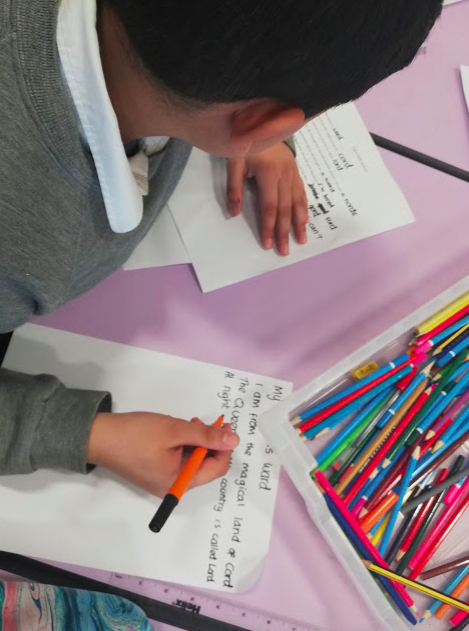
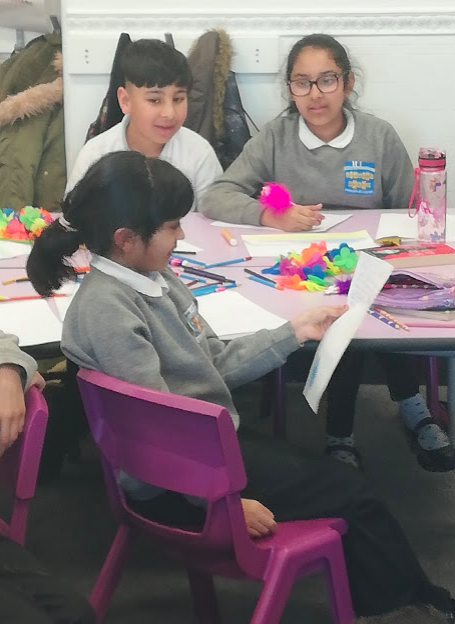
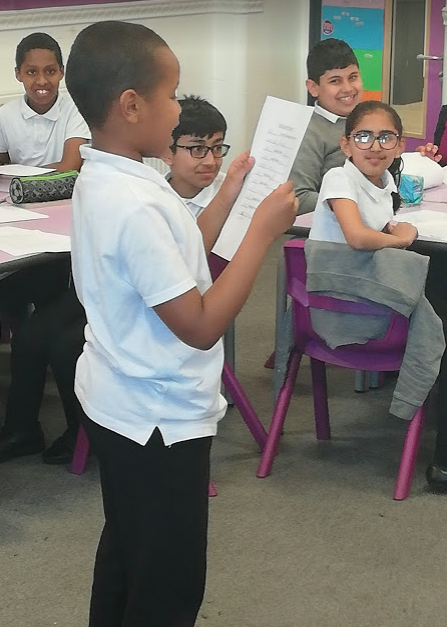
The children were so excited about writing their own poem that when we asked to read the poem out majority of the children wanted to read it out to the class. Our group did not expect this as we first thought asking the children to read their poems out might make them feel uncomfortable, however we was glad to see we made them having fun as well as learning which is why they were so motivated and wanted to read their poems out loud as they accomplished something good!
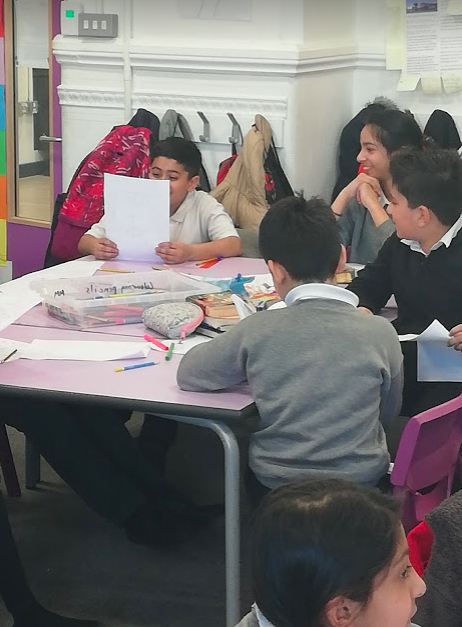
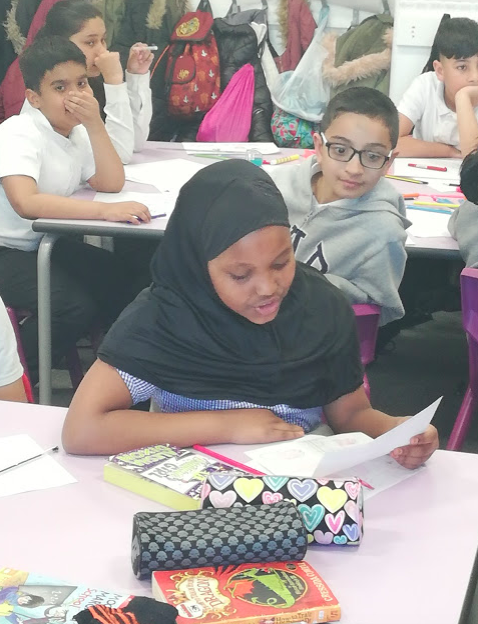
The purpose of why I joined the education project was to see if I enjoyed teaching children something I love, and I am so happy I a part of this project, as I was delighted to work with the children. It was so nice for me to see how much they enjoyed poetry and the fascinating ideas they thought of. I was not to sure if I wanted to go into teaching, however now I have now realised it is a career I would enjoy as I felt content and sense of satisfaction teaching the children what poetry really is and how much it matters and I am positive the children enjoyed it since one of the children said, ‘‘ I never used to like poetry until now, ’’ and that sentence itself made the project a success.
Bibliography
https://www.vlebooks.com/vleweb/Product/Index/316788?page=0
http://sk.sagepub.com.ezproxy.mmu.ac.uk/books/creative-ways-to-teach-literacy
http://dspace.bracu.ac.bd/bitstream/handle/10361/3553/10303010.pdf?sequence=1

 To Poetry and Beyond